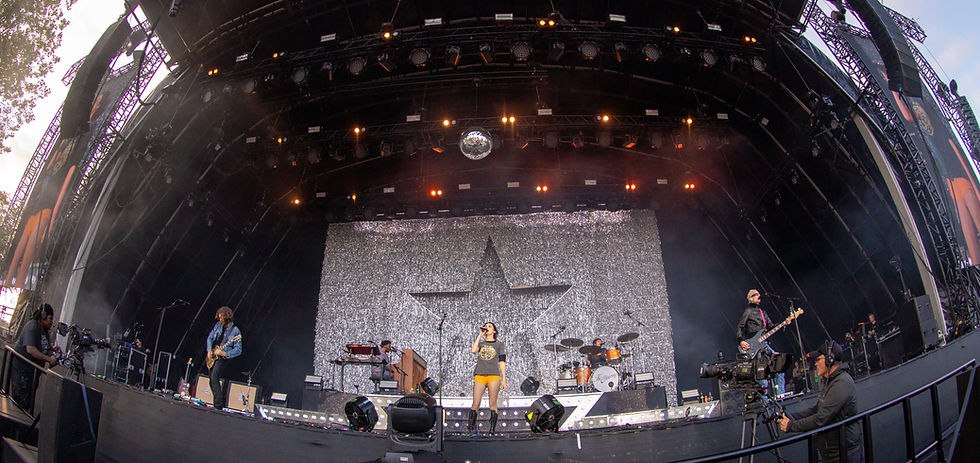
The Sex Pistols featuring Frank Carter, TK Maxx Presents Live At The Piece Hall, Halifax, 11th July 2026

A legendary catalogue, an inspired frontman and enough energy to leave a sun-drenched Halifax feeling like 1977 all over again.
Words Iain McClay, Photos Frank Ralph
The Piece Hall's summer series has welcomed some huge names over the years, but few carry the cultural weight of the Sex Pistols. Remarkably, a band that released just one studio album continues to cast a shadow over British music nearly fifty years later. Punk didn't just change music; it changed attitudes, fashion and youth culture. Seeing those songs performed in one of Britain's finest outdoor venues always felt like an opportunity worth taking.
It proved to be exactly that.
With England playing that evening, the schedule had been brought forward, meaning I unfortunately missed Panic Shack. Having seen them several times before, I know exactly what I missed – a riot of humour, razor-sharp choreography and enough attitude to power a small city. Even hearing the closing moments of their set while queuing to get inside suggested they'd delivered yet again.
The Sex Pistols featuring Frank Carter, TK Maxx Presents Live At The Piece Hall, Halifax, 11th July The Sex Pistols featuring Frank Carter, TK Maxx Presents Live At The Piece Hall, Halifax, 11th July The Sex Pistols featuring Frank Carter, TK Maxx Presents Live At The Piece Hall, Halifax, 11th July The Sex Pistols featuring Frank Carter, TK Maxx Presents Live At The Piece Hall, Halifax, 11th July The Sex Pistols featuring Frank Carter, TK Maxx Presents Live At The Piece Hall, Halifax, 11th July The Sex Pistols featuring Frank Carter, TK Maxx Presents Live At The Piece Hall, Halifax, 11th July The Sex Pistols featuring Frank Carter, TK Maxx Presents Live At The Piece Hall, Halifax, 11th July The Sex Pistols featuring Frank Carter, TK Maxx Presents Live At The Piece Hall, Halifax, 11th July
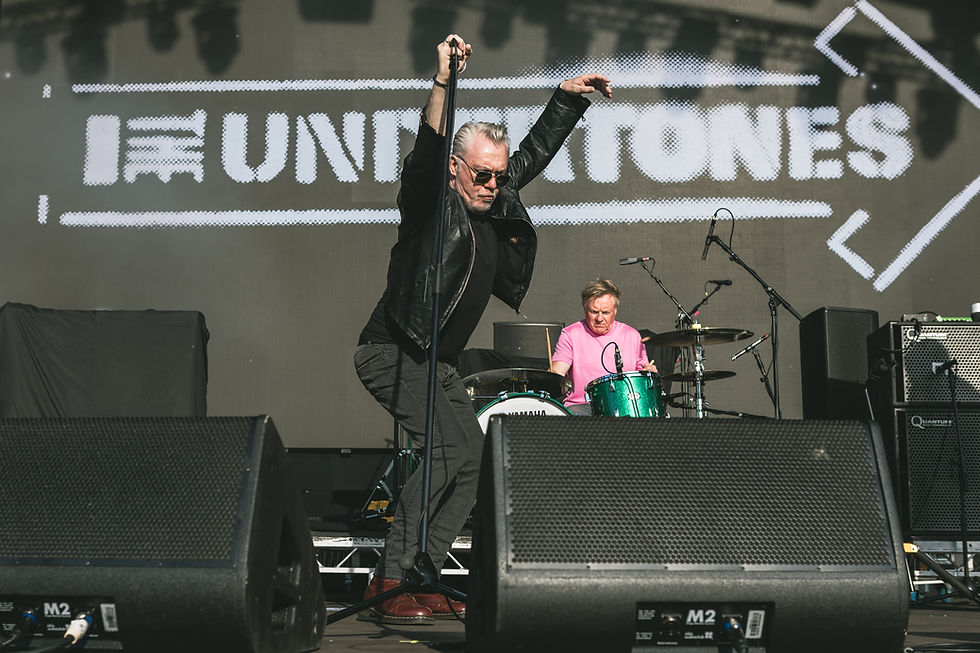
Thankfully, I made it in time for The Undertones, a band I'd somehow never managed to catch live despite growing up with their music. Like the Pistols, the original line-up has changed, with Paul McLoone replacing Fergal Sharkey back in 1999. In truth, McLoone has now fronted the band for longer than Sharkey ever did, and he wears the role comfortably, bringing warmth, wit and plenty of personality.
Their set was a reminder of just how many songs have quietly become part of Britain's musical DNA. Teenage Kicks, Jimmy Jimmy, Here Comes the Summer and My Perfect Cousin rolled by to huge cheers from a crowd that knew far more words than perhaps even it expected. McLoone joked that the band no longer bounce around the stage as they once did, but the songs still did the heavy lifting. The audience happily supplied the bouncing instead.
The Sex Pistols featuring Frank Carter, TK Maxx Presents Live At The Piece Hall, Halifax, 11th July The Sex Pistols featuring Frank Carter, TK Maxx Presents Live At The Piece Hall, Halifax, 11th July The Sex Pistols featuring Frank Carter, TK Maxx Presents Live At The Piece Hall, Halifax, 11th July The Sex Pistols featuring Frank Carter, TK Maxx Presents Live At The Piece Hall, Halifax, 11th July The Sex Pistols featuring Frank Carter, TK Maxx Presents Live At The Piece Hall, Halifax, 11th July The Sex Pistols featuring Frank Carter, TK Maxx Presents Live At The Piece Hall, Halifax, 11th July
By the time the sun-baked stage was cleared for the headline act, the Piece Hall was ready.
The crowd itself was almost as entertaining as the bands. Original punks stood shoulder to shoulder with younger fans discovering these songs live for the first time. There were people who looked as though they'd never stopped dressing for 1977, others who clearly had, and plenty simply there to witness one of rock's most influential names. It was a wonderfully mixed audience, united by anticipation rather than nostalgia.
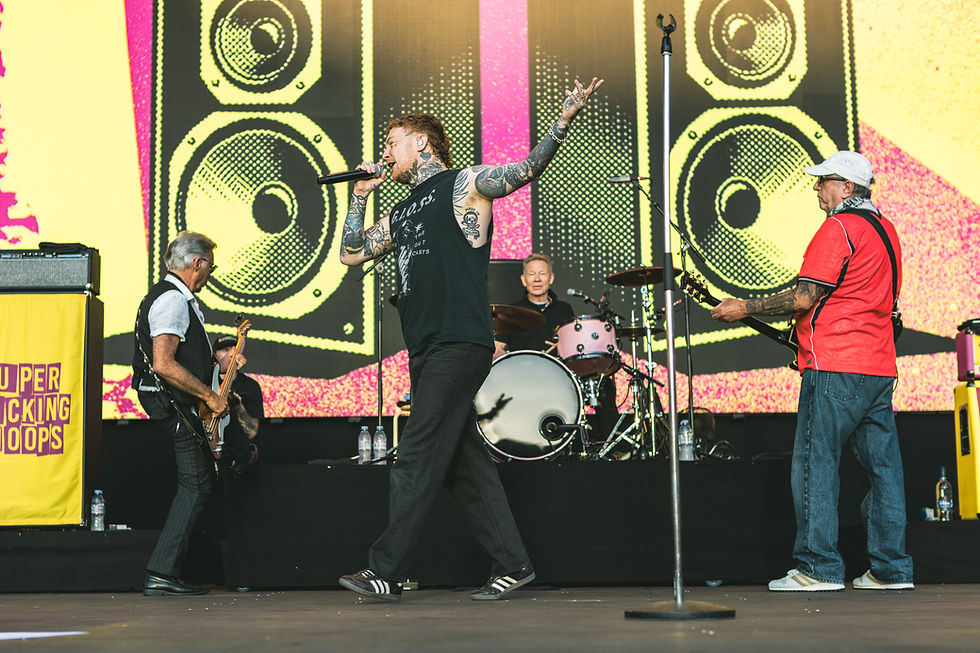
John Lydon may no longer be part of the touring line-up, but Steve Jones, Paul Cook and Glen Matlock remain, joined by Frank Carter in what continues to look like one of modern rock's smartest partnerships.
The Sex Pistols featuring Frank Carter, TK Maxx Presents Live At The Piece Hall, Halifax, 11th July The Sex Pistols featuring Frank Carter, TK Maxx Presents Live At The Piece Hall, Halifax, 11th July The Sex Pistols featuring Frank Carter, TK Maxx Presents Live At The Piece Hall, Halifax, 11th July The Sex Pistols featuring Frank Carter, TK Maxx Presents Live At The Piece Hall, Halifax, 11th July The Sex Pistols featuring Frank Carter, TK Maxx Presents Live At The Piece Hall, Halifax, 11th July The Sex Pistols featuring Frank Carter, TK Maxx Presents Live At The Piece Hall, Halifax, 11th July
My first thought wasn't about Carter, though.
It was wondering how Glen Matlock managed to look impossibly cool while standing in blazing Yorkshire sunshine. The rest of us were melting. He barely looked warm.
Frank Carter, meanwhile, seemed powered by something entirely different. From the moment the band exploded into life, he barely stopped moving. Sprinting from one side of the stage to the other, climbing barriers, throwing himself into the crowd and constantly demanding more, he didn't so much replace Lydon as refuse to imitate him. It was his own performance, and that's exactly why it worked.
With only one studio album to draw from, a handful of carefully chosen covers complemented the set, but make no mistake—this was essentially a victory lap through one of the most influential catalogues in British music.
Pretty Vacant. God Save the Queen. No Fun. Bodies. Holidays in the Sun. Anarchy in the U.K. One after another, they landed with all the force you'd hope for.
Carter barely had to encourage the audience, but he did anyway, somehow persuading a crowd whose average age was comfortably north of fifty to open up a sizeable mosh pit. Watching people who probably hadn't thrown themselves into one since the late seventies enthusiastically rediscover the art was worth the ticket price on its own.
The Sex Pistols featuring Frank Carter, TK Maxx Presents Live At The Piece Hall, Halifax, 11th July The Sex Pistols featuring Frank Carter, TK Maxx Presents Live At The Piece Hall, Halifax, 11th July The Sex Pistols featuring Frank Carter, TK Maxx Presents Live At The Piece Hall, Halifax, 11th July The Sex Pistols featuring Frank Carter, TK Maxx Presents Live At The Piece Hall, Halifax, 11th July The Sex Pistols featuring Frank Carter, TK Maxx Presents Live At The Piece Hall, Halifax, 11th July The Sex Pistols featuring Frank Carter, TK Maxx Presents Live At The Piece Hall, Halifax, 11th July
The only pause came during My Way. Introducing it almost like the band's obligatory "ballad", everyone took a well-earned breather before the song inevitably shed any pretence of refinement and became the snarling Pistols version everyone had come to hear.
By the closing moments, there wasn't much left in the tank—either on stage or in the audience. There would have been plenty of aching legs, ringing ears and hoarse voices the following morning, but nobody seemed remotely concerned.
The Sex Pistols may have only made one album, but on nights like this you're reminded that influence isn't measured by quantity. Nearly fifty years on, the songs still start mosh pits. Punk, it turns out isn't dead, in fact it never needed saving, it was always alive and kicking.